A real menhir is made by time: rain, frost, lichen, the slow patience of centuries. A small one has to be made by hand, and the hand has to pretend to be time. Every layer is a small forgery of age, and every layer partly buries the one before. That isn’t so different from how memory works.
The drawing came first.
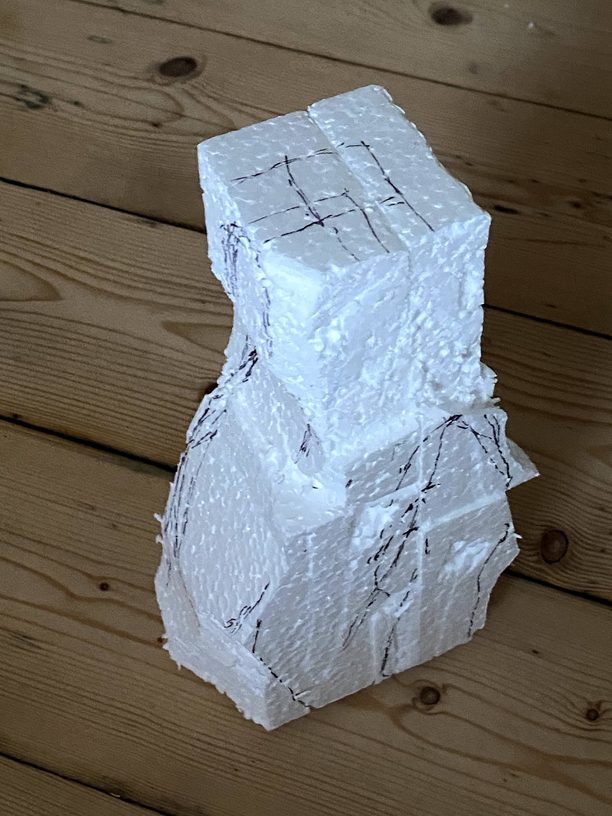
Polystyrene, marked in biro.
It begins as something light and without history. Offcuts of packing foam are glued and stacked, with the cleft and the faces drawn straight onto the surface. Nothing here is stone yet. It is only an intention.
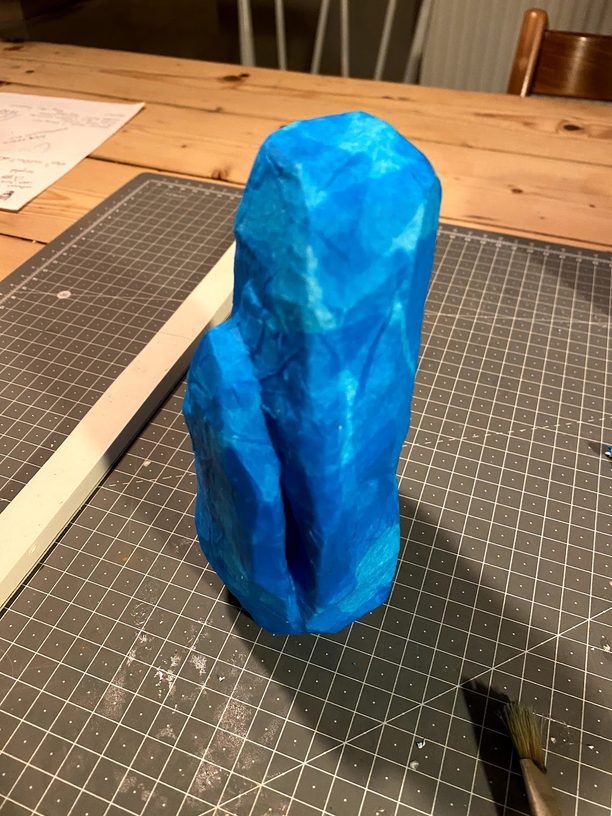
Blue tissue.
I carved it down and then skinned it in tissue and glue. The blue was an accident, just the paper I had to hand, but I liked it for a while: a stone that hadn’t yet decided what it was.
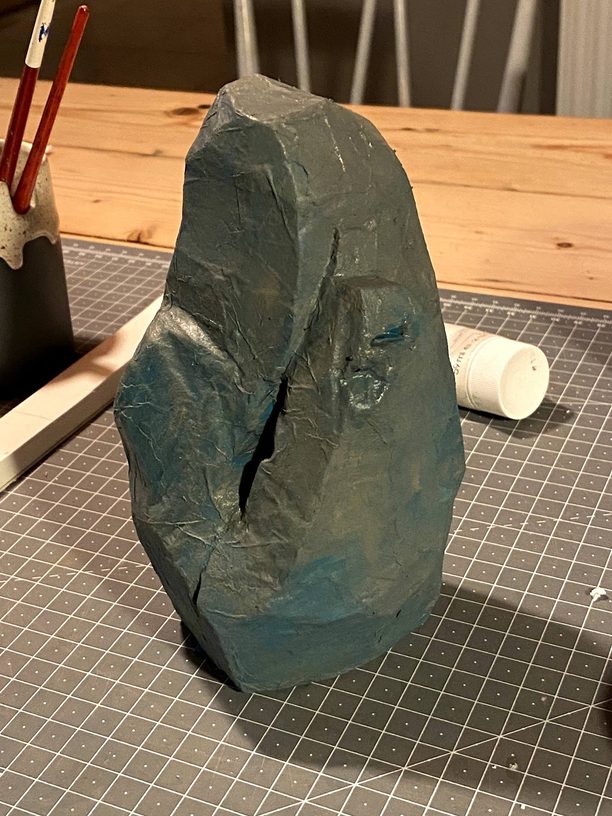
First paint.
The first coat was a blue-grey. The blue still shows at the edges, the way an older version of a story leaks into the newer one.
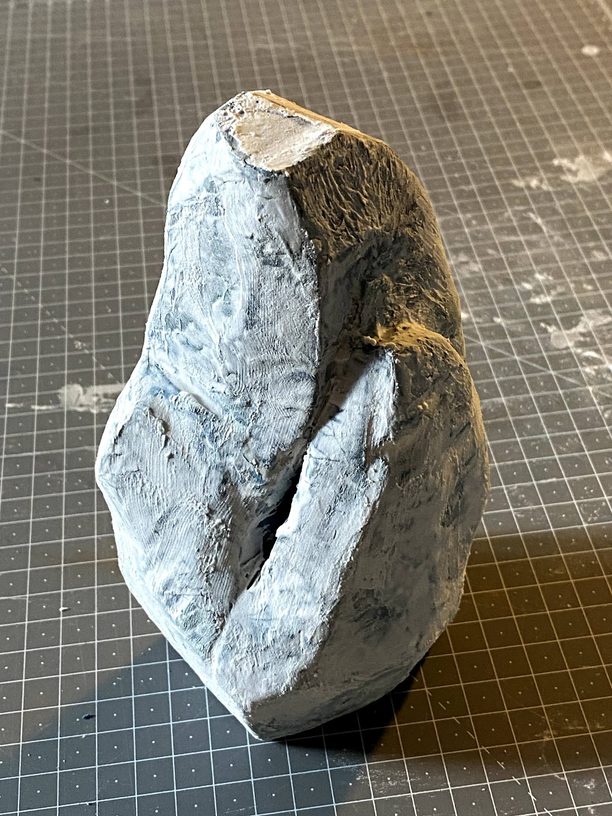
Texture, scraped back.
Next came textured coats, scraped on and rubbed away again. Each one half-erases what lies beneath it.
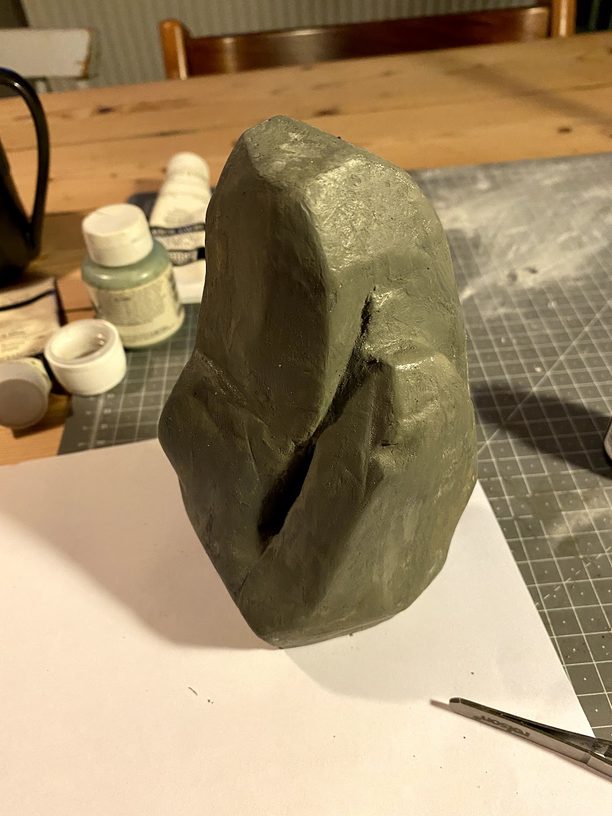
Grey-green.
Here it moves closer to granite. It’s too clean. No stone is that sure of itself.
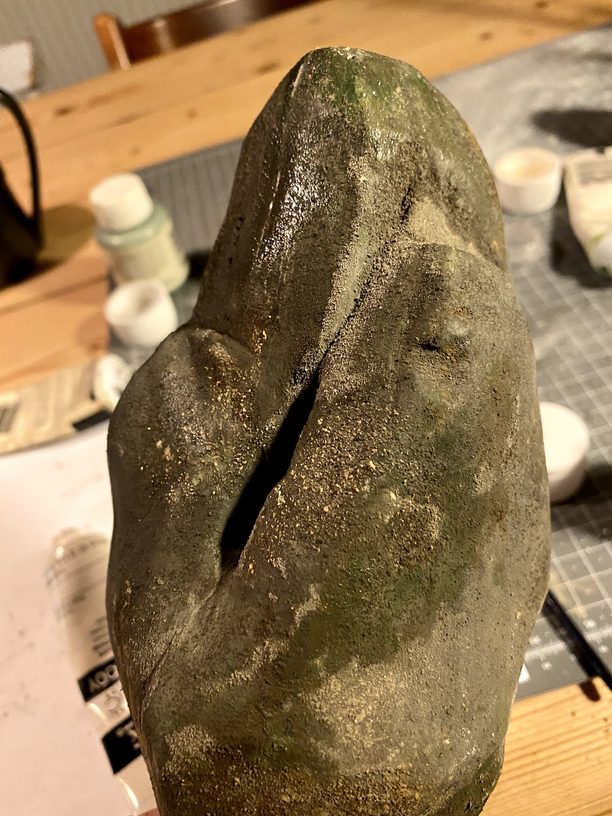
Grit and dust.
I dusted on sand and pigment, sealed them, and worked greens into the hollows where water would gather. This is the slowest part: adding the centuries.
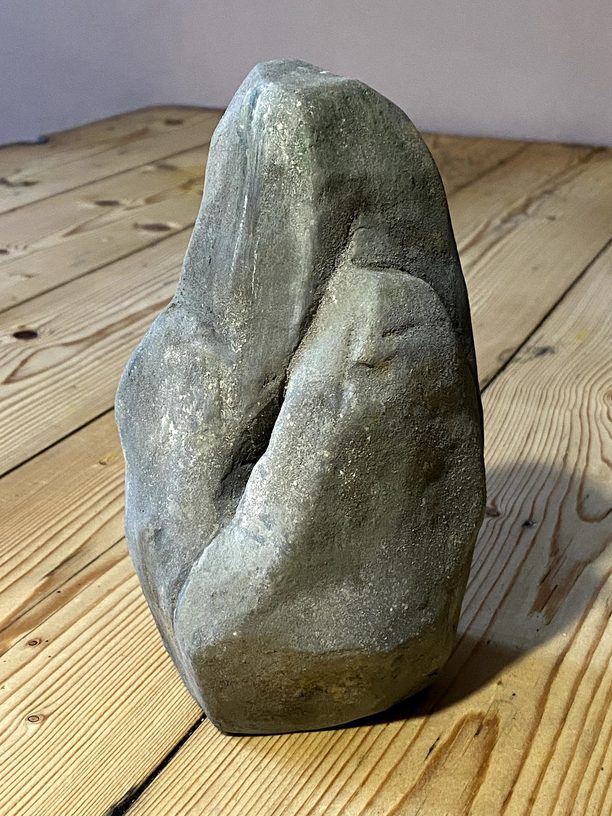
Weathered.
Finally it is heavy-looking, though it weighs almost nothing. The fracture runs down its spine, as it always did.
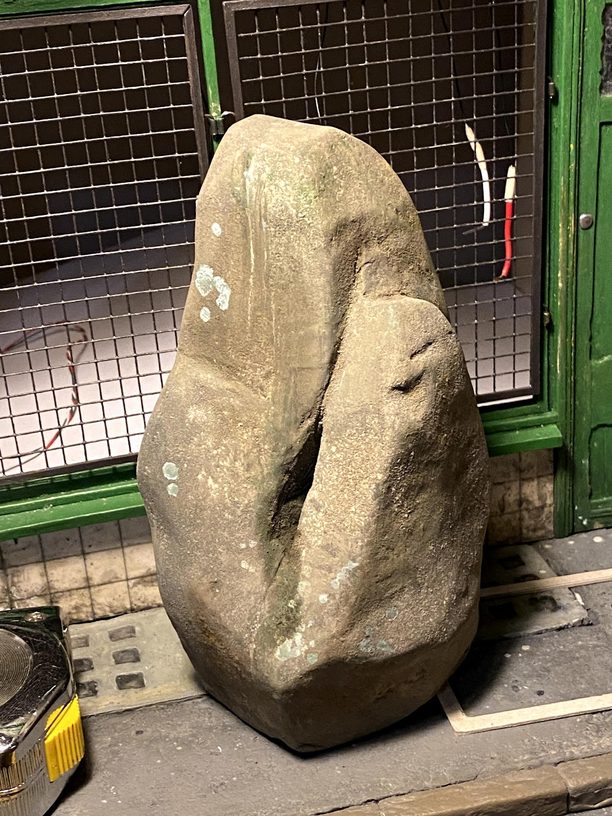
Out of place.
It now stands against the entrance of Riven Street with lichen blooming on its shoulder. It is a miniature and a fake, but it holds stories in its cracks.
Leave a comment