A crystal facet is not just a surface; it is a boundary where velocity breaks.
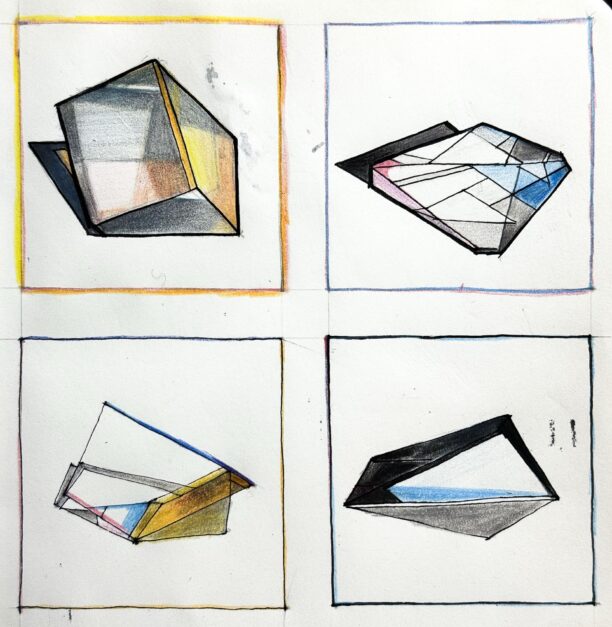
As long as a crystal is clean and unbroken, light moving through it behaves in a completely predictable way.
If you know the type of crystal, you can calculate the exact speed of the light down to the decimal point. Some crystals split a beam of light into two separate paths, but both paths still travel at exact, predictable speeds depending on the angle the light enters.
The only time light becomes unpredictable is if the crystal has random flaws, dirt, or internal cracks that scatter it chaotically. Otherwise, the journey is completely set from the start.
But when you see a crystal, this is not your first thought. There is a quiet intimacy in turning a crystal over in your hand. Feeling its cold heft, tracing the sharp planes, watching how the elemental geometry catches the room’s light and makes it dance around you. The physics prove it is a rigid, predictable machine, but the hand meets it as something miraculous.
There is beauty in a rigid system.
Until you map that same rigidity onto time.
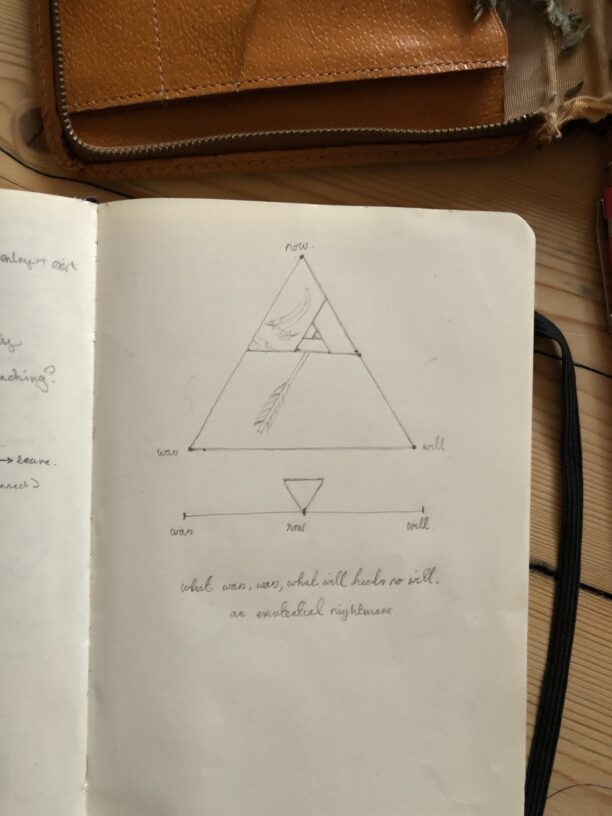
If light through a crystal is locked into an exact, inescapable path from the moment it strikes the surface, what happens when time is the medium?
What was, was, what will heeds no will. Is beauty still to be found in the dancing light, or is this an unveiling of an existential nightmare?
Leave a comment